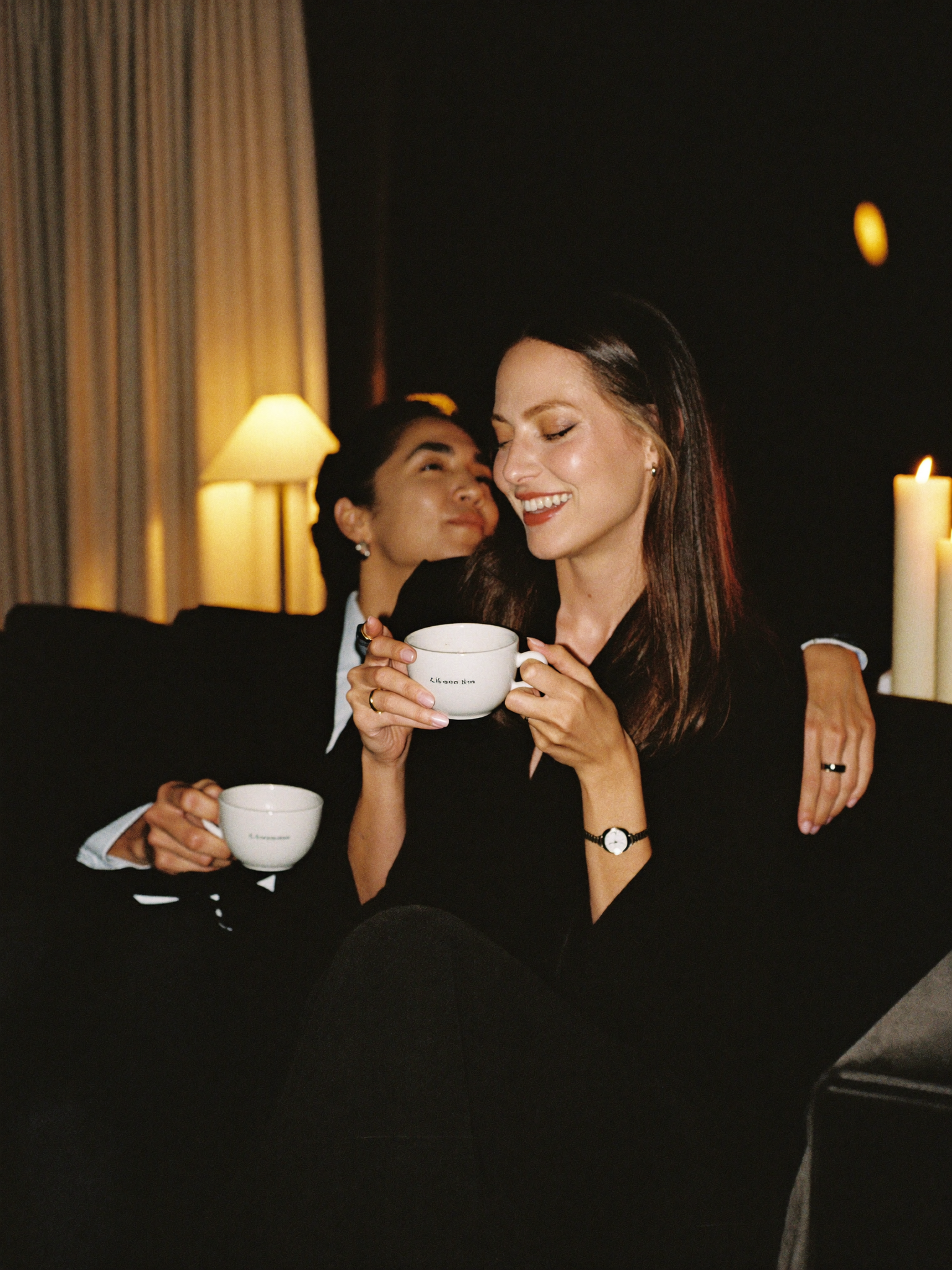
Connection isn't a thing you find — it's a practice you build. The couples we know who feel most at ease with each other almost always share one quiet habit: a small, recurring ritual that the rest of the week organizes itself around.
It's not the date night that matters, or the trip, or the elaborate evening. It's the predictable, undemanding hour — coffee on the balcony before the kids wake up, a Sunday bath, the ten minutes between dinner and the dishes where neither of you reaches for a phone. The ritual is the soft architecture inside which everything else can happen.
Start with one ritual, not a system
Couples who try to redesign their week often abandon the system inside two weeks. Couples who pick a single recurring twenty-minute window — and protect it — almost always still hold it a year later. Begin smaller than feels meaningful.
The most considered evenings we know are the ones that show up on a Tuesday.
Treat self-care as a deposit, not an escape
A long bath, a slow workout, an unhurried meal: each of these lowers the activation energy for presence later in the day. They are not retreats from your relationship; they are deposits into it. When the day has already been honored on its own terms, you bring less of it into the evening.
Make the surface match the intention
A good ritual has texture. Warm oil instead of cold lotion. A bath soak instead of a quick rinse. Soft light instead of overhead. These are not decorations — they are signals to the body that this stretch of time is allowed to be slower than the rest. Build for the senses you want to honor.
Frequently asked
- How often should we plan intentional connection time?
- Once a week is the floor most couples we spoke with hold to. The shape matters less than the consistency — a Tuesday tea ritual counts as much as a Saturday night out.
- Does self-care really change how we show up for each other?
- Yes. Self-care lowers the activation energy required for presence. When the day has already been honored on its own terms, you bring less of it into the evening.
- Where do products fit into an intentional practice?
- Treat them as tools, not centerpieces. A massage oil opens space for slowness; a soak makes the bath worth the time. The practice is the thing — the product carries it.


